


High-performance, large-size carbon fiber composite crucibles pass technical evaluation.
Release date:
2009-08-12
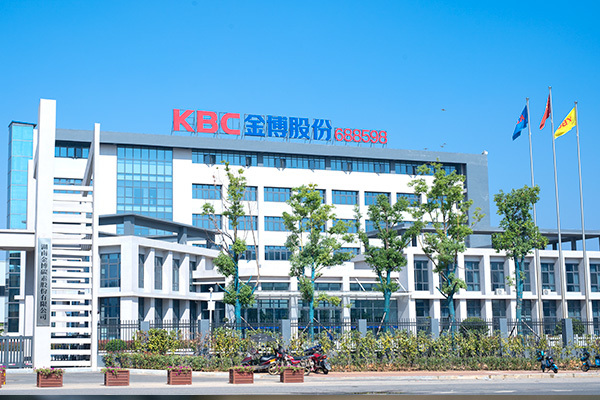
On March 26, the project "High-Performance Large-Scale Carbon Fiber Composite Crucibles and Their Manufacturing Technology," jointly developed by Hunan KBC Composite Materials Technology Co., Ltd. and Central South University, successfully passed the provincial science and technology achievement appraisal organized by the Provincial Department of Science and Technology in Changsha. Academician Huang Boyun, President of Central South University, attended the appraisal meeting. The appraisal committee was chaired by Professor Yao Shouzhuo, an academician of the Chinese Academy of Engineering and a renowned professor from Hunan University. The committee also included distinguished professors from Tsinghua University, National University of Defense Technology, and Hunan University, as well as experts from the Changsha Institute of Mining and Metallurgy and specialists in single-crystal silicon manufacturing. The appraisal session was personally presided over by Deputy Director-General Liang Qiushong. After listening to the project completion unit's report, reviewing the appraisal materials, engaging in on-site questioning, and holding thorough discussions, the expert members of the appraisal committee concluded that the high-performance, large-scale carbon fiber composite crucibles can effectively replace high-purity isostatically pressed graphite crucibles, significantly upgrading equipment capabilities in the field of single-crystal silicon production. Overall, the technology has reached an internationally advanced level.
Currently, single-crystal furnaces commonly use high-purity isostatically pressed graphite crucibles to hold polycrystalline silicon raw materials during the process of growing single-crystal ingots. During ingot pulling, the graphite crucible operates at temperatures around 1500°C, simultaneously handling critical tasks such as heat transfer and bearing the weight of both the quartz crucible inside the furnace and the polycrystalline silicon material. Under these extreme conditions, the crucible must withstand thermal stress without cracking or shattering—especially when sudden power outages occur, causing the rapidly cooling polycrystalline silicon to expand in volume by about 10%, which could otherwise lead to catastrophic failure. Such failures would not only result in the complete loss of the entire batch of raw materials but also pose serious risks of damaging the thermal field system and even rendering the entire furnace irreparable. As a result, the graphite crucible—a key core component with the most demanding operational requirements within the thermal field system—is given utmost attention and rigorous control by the manufacturing units. However, due to its low tensile strength, poor thermal shock resistance, susceptibility to cracking, and short lifespan—often lasting just a few days at best, or up to a little over a month at most—their limited durability significantly disrupts normal production processes and drives up overall manufacturing costs for companies.
The carbon fiber composite crucible is fabricated from a composite material composed of carbon fibers and a carbon matrix, produced using advanced 3D weaving and near-net-shape molding technologies. Compared to graphite crucibles, it boasts remarkable advantages such as high specific strength, excellent thermal shock resistance, extended service life, and significant energy- and material-saving benefits. As an ideal upgrade product that can replace high-purity isostatically pressed graphite crucibles, it provides a robust product and technological foundation for China's rapidly growing solar photovoltaic enterprises. This innovation also helps reduce the nation's reliance on imported high-purity graphite, laying a solid technical and market groundwork for establishing a nationally recognized C/C composite materials brand and positioning China as a global leader in this field. Moreover, it will contribute meaningfully to global efforts aimed at energy conservation and emission reduction.
Next page
Next page

Scan to follow our WeChat official account